

For the past decade, ride quality, performance, and mileage in premium cars and bikes have undergone substantial refinement. All credit goes to the advancement in engine and power management systems. The technical sophistication has taken the vehicle metrics to another level.
So, what’s the secret sauce that turned things around? The use of Carbon Composite is among the vital contributors.
You may have seen the term tossed around by those who own racing bikes or luxury cars. The truth is, it’s not just for high-end cars anymore.
You might have heard carbon composites mentioned with racing bikes or luxury cars. But the truth is, they’re no longer reserved for high-end cars. Automakers are now using them in everyday vehicles to make cars lighter, safer, and more fuel-efficient, even on Indian roads.
What are Carbon Composite Materials?
So, what are carbon composite materials? Think of carbon composite as a powerful combination. On one side, you’ve got carbon fibre—super-strong, thread-like materials. On the other hand, you have a resin or plastic that holds them together.
Carbon composites visually resemble woven fabric, yet their unique molecular architecture results in exceptional mechanical properties. The difference? The material is lighter than aluminium yet stronger than steel, delivering superior tensile strength and stiffness.
This blend makes it perfect for vehicles. Heavy steel parts? Outdated. Even aluminium, which was once a big deal for lightweighting, can’t quite match the balance of strength and weight carbon composites offer.
Why Use Carbon Composite in Cars and Bikes?
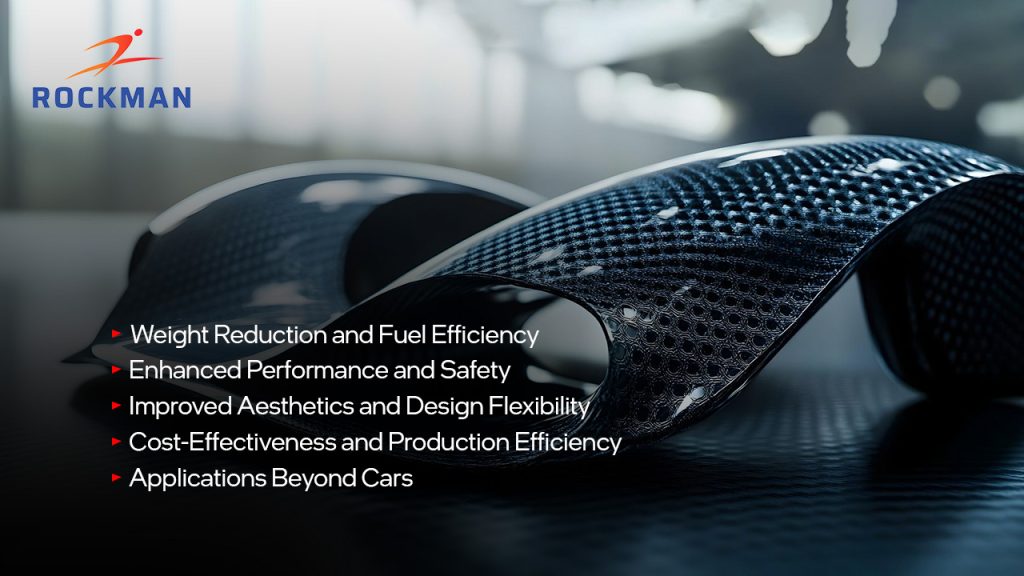
Now that you have a fundamental idea of carbon composites in automobiles, let’s look at why they’re used in motorcycles and cars. There are five main reasons. And once you hear them out, you’ll understand why more manufacturers, including many here in India, are making the switch.
1. Weight Reduction and Fuel Efficiency
Let’s start with the most obvious benefit: weight. Carbon composites are significantly less dense than steel, which directly contributes to vehicle weight reduction by up to 50%.
So, if being lightweight is the USP, what’s in there for the consumers? Lighter vehicles obviously mean higher mileage, lower fuel costs, and, for EV users, a longer battery range. Innovellix recently reported that replacing body panels and chassis parts with carbon fibre can boost fuel efficiency by as much as 15%.
In India, where fuel prices pinch every household budget, that’s a big win.
2. Enhanced Performance and Safety
A research paper published in 2020 on Research Gate states that carbon fibre composites have a far greater strength-to-weight ratio than steel and are increasingly being integrated into safety-critical areas like engineered crumple zones and bumpers.
Vehicle areas made of this material ensure controlled deformation under impact through enhanced energy absorption. This has significantly improved crash test performance, ensuring better protection for occupants
3. Improved Aesthetics and Design Flexibility
For vehicle enthusiasts, cars and bikes made of carbon have become a cultural norm—a feature showcased proudly by owners.
The glossy weave has been a style statement for some time now. However, it’s not just the style that owners feel proud of. The mouldable nature of carbon composites has opened up new creative opportunities for automotive designers who are now able to break the old aerodynamic norms and come up with stunning designs that couldn’t be achieved with traditional metals and alloys.
The next time, take a closer look when you see a gorgeously sculpted TATA (Land rover)or BMW pass by; chances are, it might be made of carbon composite.
4. Cost-Effectiveness and Production Efficiency
Here’s where things get interesting. It was considered ludicrous to think of buying a carbon fibre vehicle a decade ago. The nosebleed pricing of such vehicles was out of the reach of most vehicle owners.
Thankfully, through automated manufacturing and better resin technology, manufacturing costs have been significantly brought down, which has made it possible to build vehicles for mass consumers. Recent global reports on the automotive market show that vehicular costs have reduced by nearly 30% in the past decade.
For a price-sensitive market like India, this is a major game-changer. It means carbon composite technology is no longer stuck in the premium segment. It’s steadily moving towards the mainstream.
5. Applications Beyond Cars
A noteworthy thing about carbon composites is that they are not just for cars and bikes. They’re the primary material used in wind turbines, aerospace, and sports gear manufacturing.
For the automotive industry, this is actually a positive sign as the technology has already undergone rigorous R&D in other industries. So, by the time it lands in your vehicle, it’s already proven to work under extreme conditions.
The above five points show how crucially important carbon composite material properties are. Next, let’s understand the scene in India.
Carbon Composites: Where does India Stand?
Now that you have a clear picture of how carbon composite is used in the automotive industry, let’s try to answer the question: where does India stand in all of this?
The answer: Right in the middle of a transformation.
According to ICRA’s 2024 projections, India is poised to become a global hub for lightweight automotive components by 2030. With EV adoption picking up speed, demand for carbon composites in automobiles is expected to increase.
And it’s not just foreign brands driving the change. Domestic giants are stepping up, too. At Rockman Industries, we’ve already started integrating carbon composite technology in vehicles, especially for electric two-wheelers and passenger cars.
Rockman’s Role in this Transition
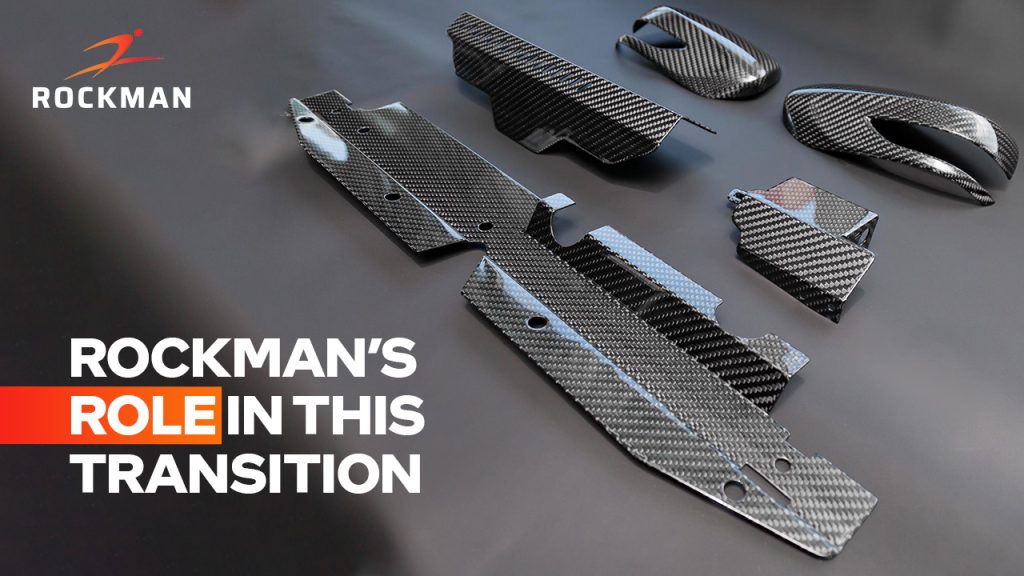
We at Rockman go beyond trends. Being among the top automotive parts producers in India, we ourselves have created the tradition of innovation, quality, and trust.
Our certified plants (IATF 16949, ISO 14001, and ISO 45001) guarantee the best global quality and safety. Our casting capabilities, such as High Pressure Die Casting (HPDC), Low Pressure Die Casting (LPDC) and Gravity Die Casting (GDC), lie behind the lightweight revolution.
We know India’s roads are full of potholes, speed breakers, crowded city lanes, and long highways, and we design every part to handle them with ease. Our goal is to develop solutions that really matter to Indian customers who are riders and drivers. And what is driving us to achieve this goal? The legacy and assurance that Rockman is one of the top-most auto parts manufacturers in India.
Everyday Benefits for You
Let’s put all the tech talk aside for a second and list out the advantages of carbon fibre in car manufacturing. As a rider or driver, here’s what carbon composite really means for you:
- Lower fuel costs, thanks to lighter vehicles.
- Safer rides with stronger, impact-absorbing materials.
- Better performance, whether you’re navigating traffic jams or cruising on highways.
- Stylish designs that turn heads.
- Longer vehicle life because carbon fibre doesn’t rust.
Looking Forward, What’s Next?
By now, you have a clear idea of why carbon composite is a cog in the wheel for auto component manufacturers in India and elsewhere.
By 2032, global forecasts expect the carbon composite automotive market to grow at over 9% CAGR. In India, with evolving EV policies and a growing middle class, the growth is expected to be even higher.
Rockman is already gearing up with scalable production, advanced R&D, and a strong OEM network. As the transition to carbon composites accelerates, we’re making sure that Indian vehicles don’t just keep up, but firmly lead that change.
Carbon Composite Technology in Vehicles – the Final Word
In vehicles, technology on carbon composite is not jargon. It is the powerful and silent back story of the future of the automobile business. It’s not only bringing weight conservation and fuel efficiency, but it’s also giving mobility, better safety and good looks – right here in India.
Here at Rockman Industries, we are honoured to be a part of this vitally important process of distributing materials of world-class credentials and putting them through rigorous testing procedures, eventually paying full attention to your car.
So, as you can see by now, carbon composite technology in vehicles is at the heart of the fast-evolving automobile industry -from carmakers to alloy wheel manufacturers. The next time you hear the term ‘carbon composite’,don’t write it off as fancy race car language. It’s something integral to the car or bike you’re taking out tonight.